The PassCash Physical Visa Debit Card is coming soon!
Send, Spend and Shop
Send, Spend and Shop
The PassCash Physical Visa Debit Card is coming soon!
Pre-order your card now and be among the first to experience financial freedom with PassCash!
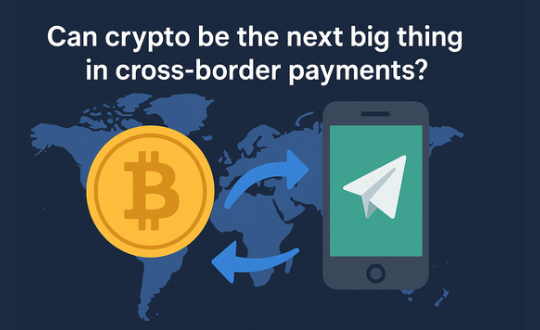
The world of international money transfers is undergoing a major shift—and cryptocurrency is at the center of it. In this article, we dive into how digital currencies are revolutionizing global transactions. From faster, cheaper eCommerce payments to seamless integration with giants like PayPal, crypto is tackling the biggest pain points in cross-border finance. Industry experts weigh in on what’s next—and why regulated stablecoins might be the missing piece to truly global adoption.
Cross-border payments have long been a pain point in global finance. Slow processing times, high fees, and lack of transparency have made international transfers frustrating for both individuals and businesses. But with the rise of blockchain technology, many are asking: Can crypto revolutionize cross-border payments?
The answer is increasingly looking like yes—and here's why.
Speed and Efficiency
Traditional international wire transfers can take 3-5 business days. With cryptocurrencies like Ripple (XRP), Stellar (XLM), or even stablecoins like USDC, transfers can happen in seconds or minutes, regardless of the time zone or banking hours. Blockchain operates 24/7—no waiting, no delays.
Lower Costs
Banks and intermediaries charge hefty fees for currency conversion, processing, and handling. Crypto transactions eliminate middlemen, reducing costs significantly. Some platforms offer cross-border transfers at just a fraction of a cent per transaction—ideal for small businesses and migrant workers sending remittances.
Global Accessibility
Over a billion people worldwide remain unbanked, yet many have smartphones. Crypto provides access to global finance without a bank account. All one needs is an internet connection and a digital wallet. This opens up powerful financial tools to developing economies.
Transparency and Security
Blockchain's decentralized ledger ensures that every transaction is traceable and immutable. This enhances trust, reduces fraud, and provides a level of transparency that traditional systems often lack.
The Challenges Ahead
Despite its advantages, crypto still faces hurdles:
- Regulatory uncertainty in many countries
- Volatility of certain cryptocurrencies
- Adoption barriers, including education and infrastructure
However, stablecoins and CBDCs (central bank digital currencies) are being developed to solve some of these issues—offering the benefits of crypto without the price swings.
Final Thoughts
While crypto may not completely replace traditional payment systems overnight, it's clear that blockchain-based solutions have the potential to reshape the future of cross-border payments. Faster, cheaper, and more inclusive—crypto is not just a trend; it's a powerful tool for global financial transformation.
Shashank Samdarshi, Business Marketer, BuyUcoin
More cryptocurrency platforms are embedding themselves into existing financial systems, providing consumers and businesses with a straightforward way to use digital assets for international transactions. PayPal's decision to incorporate cryptocurrencies within its wallet functionality is a prime example. This integration enables users to manage both their traditional and digital assets side by side, making it easier to perform cross-border payments without having to adopt entirely new systems.
Arslan Naseem, CEO, Kryptomind
Absolutely. Crypto has the potential to revolutionize cross-border payments, primarily by reducing transaction costs, eliminating intermediaries, and settling payments almost instantly—regardless of geographic boundaries. Traditional systems like SWIFT or correspondent banking are slow, costly, and opaque. In contrast, blockchain technology enables transparent and secure value transfer in real time.
However, the success of crypto in this space hinges on regulatory harmonization. Jurisdictions must create clear legal frameworks for stablecoins, crypto-asset service providers (CASPs), and anti-money laundering compliance. The EU's Markets in Crypto-Assets Regulation (MiCA), for instance, is a step in the right direction—it provides legal certainty for issuers and platforms operating across borders.
I believe the future lies in regulated stablecoins and asset-referenced tokens (ARTs), which combine the efficiency of blockchain with the price stability needed for practical use in global payments. When central banks and private actors can work within a harmonized legal structure, crypto will indeed become the next big thing in cross-border transactions.
Gökhan Cindemir, attorney at law - Turkish lawyer, cindemir law office
From my perspective at Fulfill.com, connecting eCommerce brands with 3PL partners globally, I've witnessed firsthand how cross-border payment challenges create real friction in the supply chain. Cryptocurrency certainly offers promising solutions to these pain points.
Working with thousands of eCommerce businesses, we've observed that international payments can delay fulfillment operations by 3-5 days and add 2-5% in transaction costs. Cryptocurrency could potentially eliminate these inefficiencies through near-instant settlement and reduced fees.
What's particularly compelling for our industry is how cryptocurrency addresses the fragmentation problem. Today, a brand selling in multiple countries might deal with 5-7 different payment systems, banking relationships, and currencies. Cryptocurrency provides a standardized alternative that functions identically whether you're paying a 3PL in Malaysia, Mexico, or Manchester.
The transparency of blockchain technology also creates accountability. Last year, one of our partners lost track of a significant payment for three weeks due to intermediary bank issues. With cryptocurrency's verifiable transaction ledger, this scenario becomes obsolete.
However, significant challenges remain. Regulatory uncertainty across different jurisdictions creates compliance headaches. Volatility in most cryptocurrencies makes them risky for operational expenses, though stablecoins offer a promising alternative. And adoption within established 3PL networks remains limited.
I believe cryptocurrency will become increasingly important for cross-border payments, but as a complement to traditional systems rather than a complete replacement. The businesses we see succeeding with cryptocurrency payments are starting small – perhaps using it for specific international vendor relationships while maintaining conventional payment rails elsewhere.
For eCommerce brands expanding globally, my advice is practical: start exploring the infrastructure now, understand the compliance requirements in your key markets, and identify specific payment challenges where cryptocurrency might provide the most immediate benefits.
The future is about optionality – giving businesses the right tools for each specific payment scenario they face.
Joe Spisak, CEO, Fulfill.com
